Advancing Translational Research in Proton Physics and Cancer Treatment Engineering
The development of advanced cancer treatment technologies requires a comprehensive understanding of particle physics, radiation interactions, biological responses, and integrated medical engineering systems. Translational proton physics represents an interdisciplinary field dedicated to investigating the physical principles governing proton interactions with biological tissues and their applications in modern oncological treatment.
Through the integration of theoretical investigation, experimental characterization, computational modeling, and engineering innovation, researchers can explore increasingly precise approaches to radiation delivery. These scientific developments contribute to the advancement of treatment technologies designed to improve targeting accuracy, characterize radiation effects, and support the development of sophisticated therapeutic infrastructures.


Scientific Foundations of Proton Physics
Proton physics provides the fundamental scientific framework for understanding the behavior of positively charged particles as they travel through different materials and biological environments. Their interactions with matter involve energy transfer, electromagnetic interactions, particle scattering, and localized energy deposition.
Understanding these processes is essential for evaluating the physical characteristics of proton beams and their potential applications in radiation-based cancer treatment.
Research in this field investigates several interconnected scientific dimensions:
Charged particle interactions with biological and non-biological materials.
Energy deposition mechanisms within heterogeneous environments.
Particle scattering and transport phenomena.
Proton beam propagation and spatial distribution.
Radiation interaction with cellular and molecular structures.
Physical parameters influencing treatment precision.
These investigations establish the scientific foundation for developing more sophisticated radiation treatment technologies.
Translational Research in Proton Radiation Applications
Translational research connects fundamental scientific discoveries with practical technological applications. In proton radiation research, this approach involves transforming knowledge of particle interactions into engineering principles that support the development and optimization of oncological treatment systems.
The translation of physical research into medical applications requires collaboration between physicists, biomedical researchers, engineers, radiologists, and medical technology specialists.
Particular attention is given to the relationship between particle energy, tissue composition, radiation distribution, and biological response. This multidisciplinary perspective facilitates the investigation of new treatment configurations and the continuous improvement of existing radiation delivery technologies.

Advanced Proton Beam Characterization
The characterization of proton beams is an essential component of radiation physics and treatment engineering. It involves evaluating the physical properties of particle beams to understand their behavior under different operating conditions.
Scientific investigations commonly focus on:
Beam energy and energy distribution.
Spatial beam profiles and lateral scattering.
Particle range and penetration depth.
Absorbed energy distribution.
Beam stability and reproducibility.
Radiation field geometry.
Interactions between proton beams and tissue-equivalent materials.
Accurate characterization provides important information for evaluating treatment performance and understanding the physical limitations of different radiation delivery configurations.


Integrated Cancer Therapy Engineering
The engineering of advanced cancer treatment systems requires the coordination of several technological components, including particle acceleration, beam transport, treatment positioning, imaging technologies, radiation monitoring, and computational control systems.
Integrated treatment engineering aims to establish reliable connections between these components while maintaining precision, operational stability, and safety.
This field encompasses the design and evaluation of complex medical infrastructures capable of supporting sophisticated radiation treatment procedures.
Important engineering considerations include:
Particle accelerator configuration and performance.
Beam transport and magnetic guidance systems.
Treatment room architecture and equipment integration.
Patient positioning and immobilization technologies.
Radiation detection and monitoring systems.
Computational treatment planning.
Equipment calibration and quality assurance.
Operational safety and infrastructure reliability.
Biological Effects of Proton Radiation
The interaction between proton radiation and biological tissues involves complex physical, chemical, and cellular processes. Energy deposition can initiate molecular changes, influence cellular structures, and contribute to biological responses.
Understanding these mechanisms is particularly important when investigating the relationship between radiation exposure and cellular behavior.
Research in radiation biology examines:
Radiation-induced molecular damage.
Cellular responses to ionizing radiation.
DNA damage and repair mechanisms.
Oxidative stress and reactive molecular species.
Cellular signaling pathways.
Differences in radiation sensitivity between biological tissues.
Mechanisms associated with cellular survival and cell death.
Combining biological investigations with physical characterization provides a broader understanding of the mechanisms underlying proton-based cancer treatment.


Computational Modeling and Treatment Optimization
Computational modeling plays a fundamental role in the development and evaluation of modern radiation treatment technologies. Mathematical simulations allow researchers and engineers to investigate particle transport, energy deposition, radiation distribution, and treatment configurations under controlled conditions.
These approaches support the evaluation of complex physical systems before their implementation in clinical environments.
Key research directions include:
Monte Carlo particle transport simulations.
Three-dimensional radiation dose calculations.
Computational modeling of heterogeneous tissues.
Particle range prediction.
Treatment geometry optimization.
Numerical analysis of radiation distribution.
Computational evaluation of beam performance.
The combination of computational modeling and experimental measurements contributes to more reliable scientific assessments and engineering decisions.
Medical Imaging and Treatment Guidance
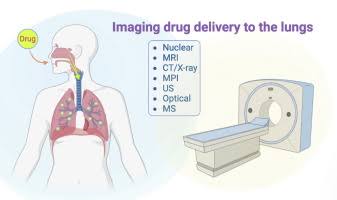
Medical imaging technologies provide essential anatomical information for planning and guiding radiation treatment procedures. Their integration into proton treatment infrastructures supports the evaluation of patient positioning, target localization, and anatomical variations.
The relationship between imaging systems and radiation delivery technologies is particularly important because changes in tissue density, anatomical structure, and patient positioning can influence particle transport and energy deposition.
Research in this area explores imaging-assisted treatment planning, anatomical modeling, image registration, and technological solutions for improving treatment guidance.

Radiation Protection and Quality Assurance
Radiation protection and quality assurance are essential components of advanced oncological treatment infrastructures. Their purpose is to maintain appropriate operational conditions, evaluate equipment performance, and minimize unnecessary radiation exposure.
A comprehensive quality assurance framework involves regular equipment inspections, calibration procedures, radiation measurements, operational verification, and documentation of technical performance.
Scientific and engineering investigations may address:
Radiation shielding calculations.
Environmental radiation monitoring.
Dosimetric measurement procedures.
Equipment calibration and validation.
Treatment system performance verification.
Technical documentation and traceability.
Operational risk assessment.
These activities contribute to the reliability and safety of complex radiation treatment environments.
Interdisciplinary Collaboration and Scientific Innovation
The advancement of proton-based cancer treatment requires coordinated expertise across several scientific and technological disciplines.
Particle physicists investigate fundamental radiation interactions, biomedical researchers characterize cellular responses, medical physicists evaluate treatment parameters, and engineers develop the infrastructure required for reliable technological implementation.
Interdisciplinary collaboration facilitates the exchange of scientific knowledge and supports the development of innovative approaches to cancer treatment.
The integration of physics, biology, computational sciences, and medical engineering creates opportunities for improving existing technologies and exploring future applications.

Future Perspectives in Proton Therapy Engineering
Emerging developments in particle acceleration, computational modeling, imaging technologies, and radiation monitoring continue to influence the evolution of advanced cancer treatment infrastructures.
Future research directions include the investigation of more compact accelerator systems, improved particle transport technologies, adaptive treatment planning, advanced imaging integration, and increasingly sophisticated computational approaches.
Further scientific investigation into biological responses to proton radiation may also contribute to a better understanding of treatment effectiveness and the factors influencing individual tissue responses.
The continued convergence of fundamental physics and translational medical engineering will remain an important driver of innovation in radiation-based cancer treatment.
Conclusion
Translational proton physics and integrated cancer therapy engineering represent a multidisciplinary scientific domain connecting particle interactions, radiation biology, computational modeling, and advanced medical technologies.
By investigating the physical foundations of proton radiation and integrating these findings into sophisticated engineering systems, researchers can contribute to the development of increasingly precise, reliable, and technologically advanced cancer treatment infrastructures.
Continued collaboration between scientific research and medical engineering remains essential for expanding the possibilities of modern radiation oncology.